Struck From the Board: Five Menu Words The Bull Has Retired for 2026
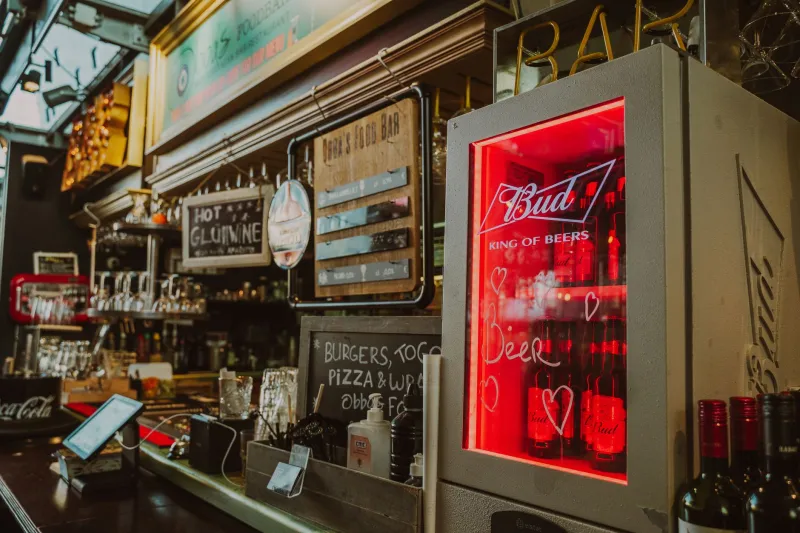
A menu is a small contract between a pub and a diner. It should tell you what is coming, roughly how it will arrive, and whether you need to save room for pudding. It should not make you feel as though you have wandered into a restaurant review written by someone who is cross with gravy.
At The Bull in Wargrave, we have spent this year editing the way we describe food. Not dumbing it down. Clearing its throat. Five words have come off the board, and a handful of plainer, more useful phrases have gone on. This is not a war on ambition. It is a tidy-up.
A Menu Should Not Clear Its Throat
There is a moment, reading certain menus, when you realise you are not being told about dinner. You are being auditioned for it. The language is doing a job, but the job is not appetite. It is distance.
A village pub does not need distance. It needs a chalkboard you can read from the door, a description that survives being read aloud after a wet walk, and a kitchen that is happy to explain the difference between the pie with the lid on and the pie with the lid off. Wargrave is not a place that requires a glossary with its lunch.
So here are the five words we have retired this year, and what we write instead.
Word One: 'Deconstructed'
Deconstructed means not put together. On a menu, it usually means the kitchen has done something interesting and then decided not to commit. A deconstructed steak and ale pie is a bowl of stew with a pastry lid leaning against it. That can be delicious. It is not a pie in the accepted sense.
What we write instead: steak and ale pie with a shortcrust lid, gravy jug on the side. If the lid is loose, say the lid is loose. If the gravy comes separately, say so. A diner should not have to assemble their own dinner unless they have ordered a build-your-own plate, which we are not doing.
Word Two: 'Jus'
Jus is gravy that went to university. It is not a bad word in a formal kitchen, but on a pub menu it often sounds like an apology for gravy. It suggests the chef would like you to know that the liquid on the plate has been somewhere and learned something.
What we write instead: gravy, or pan juices. If it is thin and sharp, we say thin and sharp. If it is thick and dark, we say thick and dark. At The Bull, Sunday roast gravy is gravy. We are not calling it a roasting jus, because that helps nobody and mildly irritates the Yorkshire pudding.
Word Three: 'Artisan'
Artisan is a word that tells you almost nothing except that someone has decided to charge for it. It has been rubbed so smooth by use that it no longer has a flavour. A loaf is not better because a menu calls it artisan. It is better because the baker knows what they are doing.
What we write instead: the bakery, the village, the loaf. Sourdough from a bakery in Twyford. Bread from the people who have been making it for years. When you can name the place, you do not need the badge. A pub menu should be place-led, not label-led. If we cannot name the baker, we probably should not be boasting about the bread.
Word Four: 'Elevated'
Elevated pub food is usually food with an extra saucepan. The word is a mood, not information. It tells you the kitchen has ambitions but not what it has done with them. A diner cannot taste a mood. They can taste brown butter, pickled shallot, burnt lemon, or a very good chip.
What we write instead: the garnish. Fish and chips with tartare, lemon and mushy peas. A sausage roll with a pot of mustard. If there is a flourish, name it. If there is a sauce, say what is in it. Elevated is what happens when you stand on a chair. It is not a flavour.
Word Five: 'Curated'
Curated belongs in a gallery, not on a sausage roll. A curated selection of bar snacks is, in plain English, a plate of things. There is nothing wrong with a plate of things. Some of the best evenings at The Bull involve a plate of things and a pint.
What we write instead: pork scratchings, olives, cheese straws. The diner can curate their own evening by ordering what they like. We just tell them what is in the bowl and how much it costs. That is the whole trick.
What We Write Instead
Place-led descriptions. Plain verbs. The cut, the cooking method, the bits on the side. Roasted, fried, braised, pickled, grilled. Say if it is sharp, if it is smoky, if it comes with bread, if the gravy is in a jug. Name the farm if the farm wants naming. Name the allotment if the runner beans came from it. Say when something is local, and then say how local.
At The Bull, this has meant rewriting descriptions that had begun to sound like press releases. The pie is a pie. The ham is ham. The pickle is pickle. The kitchen can still be clever; it just does not need to advertise its cleverness in a font.
The Chalkboard Test
We have a simple test for a menu line: read it aloud to someone who has just come in from a walk. If they ask what it means, rewrite it. If they ask whether it comes with chips, answer the question. If they say 'that sounds nice', the line is probably done.
The chalkboard is not a literary form. It is a notice. It should be direct, a bit rough at the edges, and honest about the gravy. A pub menu can be ambitious without being arch. It can be precise without being precious.
The Words That Stay
We are not banning description. We are banning the fog. Words like crisp, salt, smoke, sharp, warm, buttered, and cold do real work. Seasonal is fine if we say what is in season. Local is fine if we say where. A menu can be generous with detail as long as the detail is about the food and not about the person writing it.
The five words we have retired are not evil. They are just tired. They have been used to make ordinary things sound expensive and expensive things sound ordinary. In a village pub, the menu is part of the hospitality. If you need a translator, we have failed. So the board is plainer this year, and the plates are better for it. Come in, read it, ask questions. The kitchen will tell you. And if you want the gravy, it is gravy.