The Quiet Edge of the Plate: What a Pub's Pickle Jars Actually Tell You
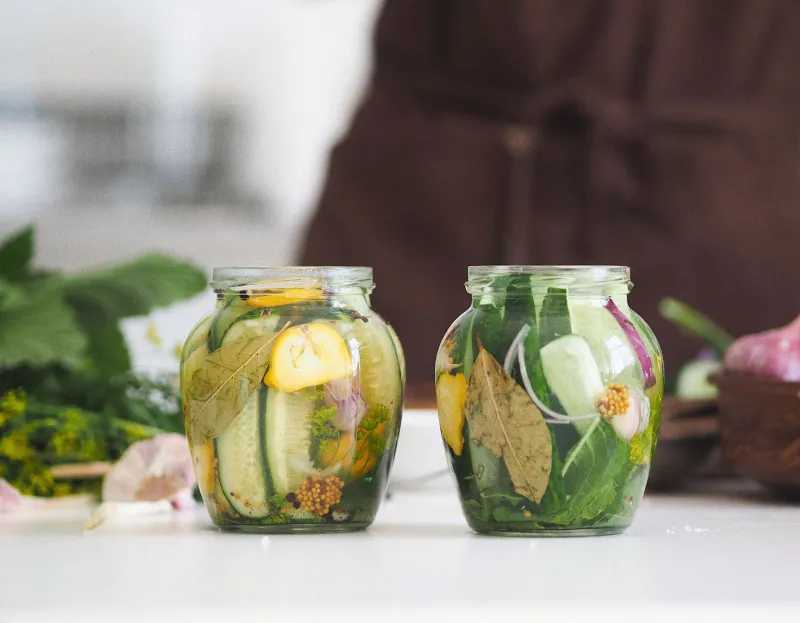
There is a particular kind of quiet on a pub pass at 11.45am. The delivery has been put away, the first lunch bookings are still twenty minutes off, and someone is labelling jars. At The Bull in Wargrave, that row of jars sits at the far end of the pass, just beyond the stack of plates and the box of pens that nobody admits to owning. They do not get menu descriptions. They rarely get a mention at all. And yet they are one of the most honest things a kitchen puts on a plate.
A jar is a calendar
November in a village kitchen is a negotiation with the end of the growing season. The garden is not quite finished, the allotment has gone quiet, and neighbours arrive with carrier bags that require immediate decisions. A jar shelf records all of this. It is not a display of craft for its own sake; it is a working answer to the question of what to do with the week's surplus before it becomes waste.
This week's shelf at The Bull has a piccalilli, a jar of pickled shallots, an apple and ale chutney that has been maturing since the first windfalls, a horseradish cream made in small batches, and a house mustard that is sharper than some people expect. Some jars are half-full. Some are labelled with a date and nothing else. That is not sloppiness. It is a kitchen keeping its own records.
One jar, from glut to pass
Follow the piccalilli. In late October, a box of cauliflower arrived from a grower who had more than he could sell in a week. There were courgettes from a neighbour's greenhouse, a few green tomatoes that would never ripen, and a bag of small onions that were too fiddly for the main menu. None of it was glamorous. All of it was usable.
The kitchen salted the vegetables overnight, then made a brine with cider vinegar, turmeric, mustard powder, a little sugar and a spoonful of flour to give it body. The smell in the prep room was sharp enough to make one of the junior chefs open the back door. The mixture went into jars, was dated, and was left alone for a fortnight. By the second week of November it had reached the pass in a small ramekin beside the ham hock croquettes and the ploughman's. The jar is not a garnish. It is a decision about how to use a glut without turning the menu into a lecture.
The spoon test: the most divisive condiment in the building
We tasted the piccalilli with three members of staff. One loved the sharp, sour-sweet hit and the crunch of cauliflower. Another found the turmeric too dominant and said it reminded them of a school dinner that had been allowed to travel. The third simply asked for more bread. The debate is the point. A condiment that pleases everyone is usually sugar and food colouring. This one has a spine.
The notes, if you want them: vinegar first, then a soft sweetness, then mustard heat that arrives late and stays for a moment. The cauliflower still has bite. It is not a smooth, polite pickle. It divides people because it has a point of view. The kitchen could soften it for the room. It does not.
Thrift is not a compromise
There is a lazy assumption that house-made condiments are a cost-saving trick dressed up as craft. Sometimes they are. But the good ones are thrift with a spine. They stop a kitchen from pretending that every week is identical. They give the menu a memory. The piccalilli in November remembers October's gluts. The apple chutney remembers the tree by the churchyard. That is not romanticism; it is practical cooking.
A jar also forces a kitchen to be honest about quantity. You cannot make a condiment from three courgettes and one cauliflower and expect it to last a month. You make what the week gives you, and then you move on. That rhythm is closer to how a village pub actually works than a printed menu that never changes.
What the shelf tells you before the main course
If you want to read a pub kitchen, ignore the chalkboard for a minute and look at the jars. A shelf of bought-in sachets says one thing. A shelf of six house-made jars, some half-full, some dated, some with a label written in biro, says another. It says the kitchen is cooking in time, not just to a spec. It says someone is prepared to make something that will never be a headline.
At The Bull, the jar shelf is not the menu. It is the menu's conscience. It sits at the quiet edge of the plate, asking to be noticed without demanding it.
The quiet edge
Next time a small ramekin arrives at the edge of your plate, treat it as a sentence rather than a garnish. Ask what is in it, and why it is there this week. The answer will usually be seasonal, occasionally awkward, and more honest than the paragraph describing the main course. In a village pub, that is worth something. The jar shelf does not shout. It does not need to.