The Pint Test: Why a Pub Pudding Should Never Ask Too Much of You
There is a moment, somewhere between the last forkful of Sunday roast and the first spoonful of pudding, when a village pub either understands its audience or doesn’t. The plate has been cleared. The second pint is half gone. Someone at the table is already talking about the walk back along the towpath, and someone else is pretending they won’t have a pudding. They will. They always do.
At The Bull, we have a fairly simple view of the pudding menu: it is not the main event, and it should never behave as if it is. It is the last warm handshake of the meal. It is the reason you sit for another ten minutes rather than reaching for your coat. And it has to survive a pint.
The pint test
A restaurant dessert can ask a lot of you. It can arrive as a sphere, a smear and a shard of something dehydrated. It can require a conversation with the person who made it. That is fine. That is a different kind of evening.
A pub pudding has to pass a tougher, quieter test. It has to work after a roast dinner that was already generous. It has to work after a pint of bitter, or a glass of something white, or a long walk in wellies that ended at our door because the sky opened over Wargrave. It has to be the sort of thing you order without reading the description twice.
Most of all, it has to be finishable. Not because portion sizes should be timid, but because a pudding that defeats you is a pudding that has misread the room. The best pub desserts leave you feeling looked after, not tested.
What actually gets ordered
If you spend enough time watching a pudding menu in a village pub, you notice a pattern. The dishes that sound cleverest are not always the ones that leave the kitchen most often. The ones that do tend to share a few qualities: warmth, familiarity, a bit of salt, and a spoon you can actually get into a bowl with.
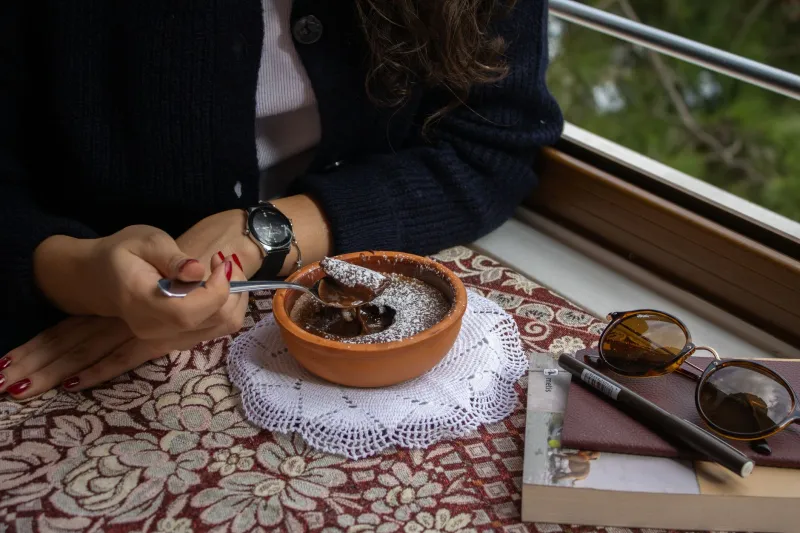
Sticky toffee pudding is the obvious example, and it is obvious for a reason. It has nostalgia built in. It arrives warm, it smells of caramel and dates, and it does not need a paragraph of explanation. When it is good, it is one of the most comforting things you can eat in Berkshire. When it is bad, it is a dense little brick with a puddle of sugar. The difference is restraint.
A posset is the other end of the scale. It is cold, sharp, light and quietly old-fashioned. It works after a heavy meal because it does not try to compete. Lemon is the classic for a reason, but seasonal fruit — rhubarb in spring, plums in late summer, forced rhubarb again when the year turns — gives it a reason to change without turning it into a performance.
And then there is cheese. Not a trolley, not a lecture, not a board that takes twenty minutes to negotiate. A few good pieces, a bit of chutney, some crackers and the option to share. Cheese is the pudding for people who claim they don’t want pudding, which is often the most important category of all.
Restraint is the hardest ingredient
The temptation with pudding is always to add one more thing. A crumb here, a tuile there, a quenelle of something that needs explaining. In a restaurant, that can be lovely. In a pub, it can feel like the kitchen has forgotten who is sitting in front of it.
Restraint is not laziness. It is editing. It is deciding that sticky toffee pudding does not need a side of banana ice cream and a smear of miso caramel. It is trusting that a posset can be just a posset. It is knowing that a bowl of stewed fruit with a bit of cream is, on the right day, exactly what someone wants after a long week.
Nostalgia matters here too, but not in a forced way. A pub pudding should feel like it has been on the menu for years, even if it hasn’t. It should feel like something your grandmother might have made, but with better butter and a bit more salt. It should feel familiar without being tired.
The spoon question
This sounds trivial. It is not. A decent spoon matters more than most people realise. A pudding that arrives with a teaspoon when it clearly needs a dessertspoon is a small insult. A sticky toffee pudding that requires a knife is a design flaw. A posset served with a spoon that is too short for the glass is a test of patience nobody asked for.
The right spoon is part of the hospitality. It says someone thought about how this will actually be eaten, not just how it will look on the pass. In a village pub, that thoughtfulness counts for more than a swirl of foam.
After the pint, before the coat
The other thing about pub pudding is that it lives in the in-between. It is not the reason you came, and it is not the reason you stayed. It is the thing that happens after the reason. It is the extra ten minutes that turn a good lunch into a good afternoon.
That is why it has to be generous but not overwhelming, familiar but not boring, and warm in the way that a pub is warm when the rain is coming down outside. It has to survive a pint, a roast, a wet walk home and the general unpredictability of a village appetite.
At The Bull, we are not trying to reinvent the pudding. We are trying to get it right. Sticky toffee with a proper spoon. A posset that tastes of the fruit it is made from. Cheese for the people who said no. And a menu that knows when to stop.
That is the defence, really. Not a manifesto, just a plate. Pudding should be the easiest decision of the meal, and the one you are quietly glad you made.