The Arithmetic of a Plate: What Actually Sits Behind a Pub Menu Price in 2026
You are sitting at a table at The Bull, menu in hand, and your eye lands on a main course at £16. It is a village pub, not a city brasserie. The question arrives before the waiter does: what is actually in that number?
It is a fair question, and not a hostile one. Most of us have a rough sense that ingredients cost money, that chefs need paying and that the lights do not run on goodwill. But the gap between that rough sense and the real arithmetic is where most menu grumbling lives. So here is a plain-English walk through the £16, not as a defence or a complaint, but as a bit of transparency. Because a menu is easier to enjoy when you know what you are looking at.
The number on the menu is not the price of the ingredients
Start with the obvious: the food on the plate is only one part of the cost. If you priced a dish purely on what the meat, vegetables, dairy and store-cupboard bits cost, most pub mains would look surprisingly cheap. The rest of the £16 is made up of everything that turns those raw ingredients into a plate that reaches your table hot, on time, and without you having to do the washing up.
That includes the kitchen team’s hours, the gas and electricity, the oil in the fryer, the rent and insurance on the building, the card fees on your payment, the linen, the glasswash, the repairs to the walk-in fridge, and the less glamorous fact that not every plate goes out of the door. Some food is prepared and not sold. Some is trimmed away. Some is simply left on a plate. All of it has been paid for somewhere along the line.
Suppliers, seasons and the cost of staying local
At a pub like The Bull, the supplier list is not a corporate spreadsheet. It is a set of relationships. Meat from a local farm or butcher, vegetables that follow the seasons, dairy from a nearby supplier, perhaps a specialist for fish or game. That is one of the pleasures of a village pub, but it also means prices move. A wet spring, a poor harvest, a spike in feed costs or a shortage of delivery drivers can all nudge the cost of a dish before it ever reaches the kitchen.
In 2026, local sourcing is not a marketing badge so much as a practical choice with a practical price. Buying direct often means paying a fair rate to the producer, and that rate is reflected on the menu. It also means the kitchen has to be flexible. If the beetroot is small or the fish is expensive that week, the menu may shift. That is not chaos. It is the kitchen responding to the real cost of real ingredients.
The bit nobody puts on a menu: labour
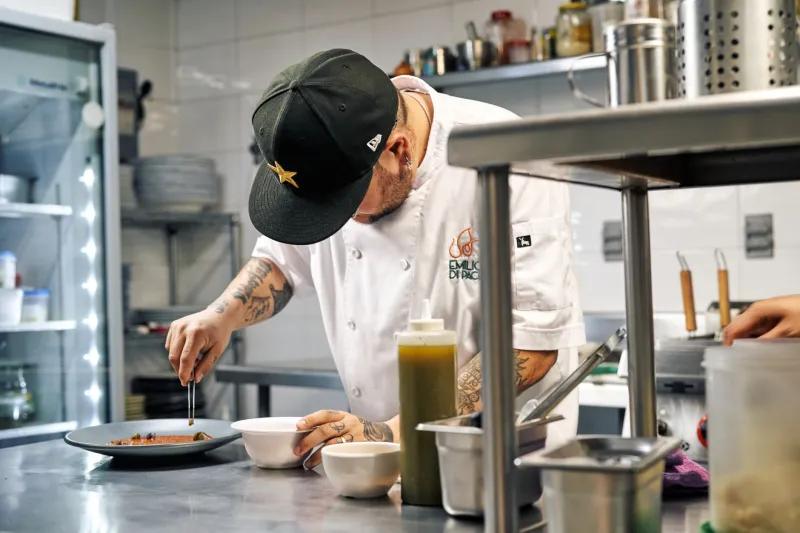
A plate of food is a small piece of skilled work. Before service, someone has peeled, chopped, braised, reduced, proved, portioned and labelled. During service, someone is timing several dishes at once, tasting, adjusting and plating. After service, someone is cleaning down, storing, labelling and prepping for tomorrow. That is not unskilled work, and it is not cheap to run.
Kitchen wages have risen in recent years, as they should. Add in pension contributions, holiday pay, training, staff food and the simple fact that a pub kitchen needs enough people to cover a busy Sunday without breaking the team. Labour is often the largest single cost behind a main course, and it is the one most easily forgotten when you are looking at a menu.
Oil, energy and the small costs that add up
Then there are the costs that feel too boring to mention but never go away. Cooking oil is not a minor expense when you are frying through a busy week. Energy bills for refrigeration, ovens, dishwashers and heating are significant. Insurance, licensing, waste collection, pest control, fire safety, card processing fees, till software, cleaning chemicals, replacement crockery — the list is long and unglamorous.
None of these costs belong to a single dish. They are shared across the whole menu. But they have to be paid for somehow. A pub that ignores them is not being generous; it is being short-sighted. The £16 is partly a contribution to keeping the lights on and the kitchen open for the next village lunch, the next birthday, the next quiet Tuesday.
The wastage bin is a line item too
This is the part that chefs talk about among themselves. Wastage is real. Not every tomato is perfect, not every piece of meat yields the same amount after trimming, and not every dish sells as predicted. A pub cannot cook to order from a completely empty fridge, so there is always some prep and some margin for error. The aim is to keep wastage low, not to pretend it does not exist.
That is why you will sometimes see a dish appear, sell well and then disappear. It is not a tease. It is the kitchen managing cost and freshness together. A menu that never changes is often a menu that is quietly wasting money — or quietly cutting corners. Neither is good for the plate.
How to read a menu more sharply, without losing the pleasure
None of this is an argument for turning every meal into an audit. The point is not to hunt for the cheapest thing on the menu or to mentally itemise every carrot. The point is to read a menu with a bit more understanding.
Look for dishes that make sense for the season. A braise in November, a salad in July, game when it is in season. Look for simple things done well — a good piece of fish, a proper sauce, a pudding that has not been shipped in frozen. Those are often where the value sits, because the kitchen is spending its money on the main event rather than on decoration.
And remember that value is not the same as cheap. A £16 main that is cooked with care, served hot and made from ingredients someone has chosen deliberately is a different proposition from a £12 main that has been engineered down to a price. The first is a meal. The second is a transaction.
What £16 is really saying
The price on the menu is a summary of a lot of small decisions: which supplier, how many hours of prep, how much oil, how much energy, how much skill, how much wastage. It is not a random number, and it is not a insult. It is the kitchen’s best attempt to cover its costs, pay its people and still be here next year.
So the next time you look at a menu at The Bull and wonder about the £16, you can wonder with a bit more context. And then, ideally, order the dish that sounds best to you, enjoy it, and let the arithmetic stay in the background where it belongs. That is what the price is for, after all — not to make you think about sums, but to let someone else do them so you can have lunch.