Handwarmers, Hot Trays and a Village High Street: Notes from Wargrave's Switch-On Night
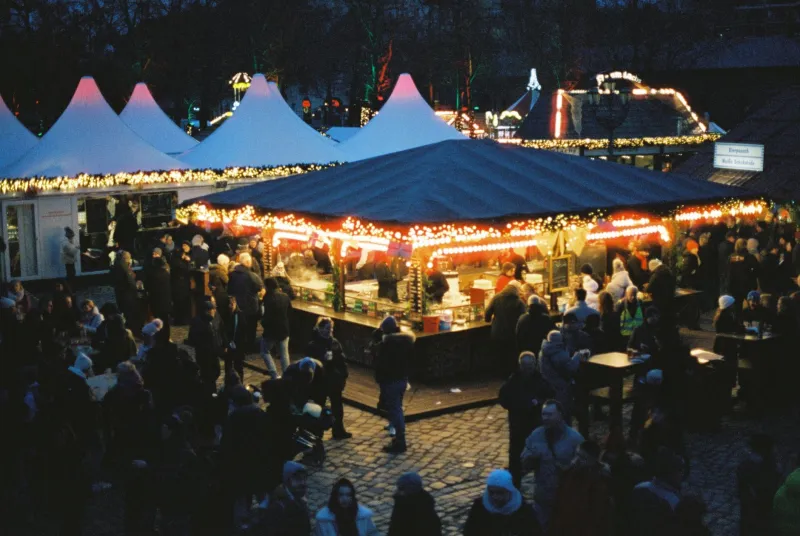
On switch-on night, The Bull is not the main event. The main event is a ladder, a timer, a cheer and a high street suddenly doing its best impression of a Christmas card. But the pub is the nearest warm room, and that changes how the kitchen works. For one evening in early December, the pass is less interested in presentation and more interested in throughput. The question is not “does it look good on the plate?” but “can it be eaten standing up, in gloves, by someone who has lost feeling in their thumbs?”
The menu is a logistics document
A switch-on menu looks like food. In the kitchen, it reads like a list of constraints. How long can it hold? How hot does it stay in a paper bag? Can it be eaten with one hand while the other holds a child, a dog lead or a phone torch? Does it survive a queue that shuffles ten paces forward, stops for the choir, then surges again?
The answers rule a lot out. Chips are a lovely idea and a terrible one. Burgers are a handsome plate and a logistical headache once they leave the building. Anything with a fried egg, a drizzle or a last-minute garnish stays inside. If it needs a squiggle, it does not leave the pass.
What does leave is the honest stuff: sausage rolls, pasties, soup in lidded cups, traybakes cut small, mince pies, and a pot of something hot for people who have been standing still for an hour. The sausage roll is probably the most public thing the kitchen makes all year. It is also the most forgiving, which is why it gets the job.
What travels well, and what stays behind
There is a difference between food that is nice and food that is nice at fifty paces. Sausage rolls hold their heat, their shape and their dignity. A pasty does much the same. Soup in a cup with a lid is a small miracle of engineering on a cold night, especially for anyone who has come off the river path underdressed for the occasion. Traybakes travel better than cakes with soft tops, and mince pies are practically designed for a pocket.
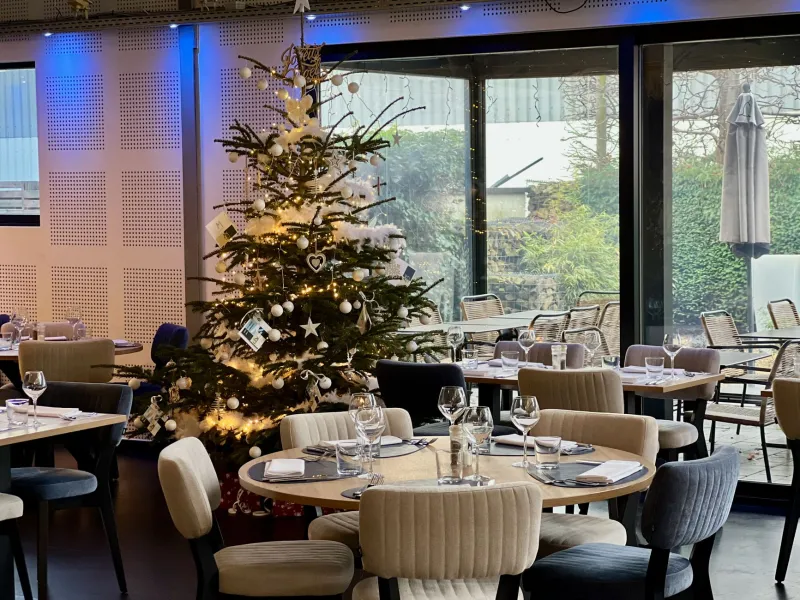
Inside the pub, the menu can relax. People who come in to sit down are not in the same hurry. They can have the plate, the cutlery, the pint and the chair. The kitchen effectively runs two services at once: a fast, forgiving outdoor one and a slower indoor one, and the two have to share the same ovens without either feeling like an afterthought. That is the real work of the night. Not the lights, not the crowd, but the timing in a small kitchen where the hot tray for outside and the roast potatoes for inside are negotiating for the same shelf.
Crowd flow, not choreography
A village switch-on is not a concert. There is no ticketing, no barrier and no proper front row. People arrive in clumps. Families with pushchairs come early, the choir arrives with a bump, the pub crowd drifts out at the last minute, and the dog walkers appear from the towpath as if summoned. The crowd moves in surges, not a stream.
That means the pub's job outside is simple and unglamorous: keep the queue visible, keep the corridor clear, keep the card reader warm and keep the food coming in batches small enough to be hot. Signage helps more than staff pointing. A clear one-way shuffle between the hatch and the door is worth more than any amount of shouting. In 2026, the practical details are the hospitality. A dry place to stand, a hot thing in a bag and a short wait are a better welcome than a long speech.
The small decisions that keep a cold evening cheerful
Most of the decisions made for switch-on night are not really about food. They are about cold hands. Do we pre-bag the sausage rolls so the queue moves faster? Do we keep a jug of hot squash for children who have been out too long? Do we have a box of spare gloves behind the bar, donated by someone who lost one last year and bought a new pair in a fit of pique? Do we put the mince pies near the till where people can see them, or keep them out of the wind?
The kitchen also has to resist overproducing. A tray of hot food that sits under the lamp for twenty minutes is worse than a smaller tray that keeps moving. The best switch-on service feels slightly understocked and constantly replenished, not groaning and slowly cooling. It is a rhythm, not a mountain.
The point of it
There is no great culinary statement in any of this. The point is not to show off. The point is to feed neighbours quickly, warmly and without fuss, so that they can go back out and watch the lights come on with something good in their hands. The pub is not competing with the switch-on. It is trying to be the warm room at the edge of it.
By half past six, the high street is full, the choir has finished, the ladder has been packed away and the lights are doing their quiet work above the shopfronts. The kitchen is tired, the trays are empty and someone is scraping the last of the soup pot. Outside, a queue has turned into a crowd, and the crowd has turned into a village. That is the whole brief, really. Feed them, warm them, send them back out glowing.