Boots, Banks and a Bowl of Water: Village Walks That Finish at The Bull
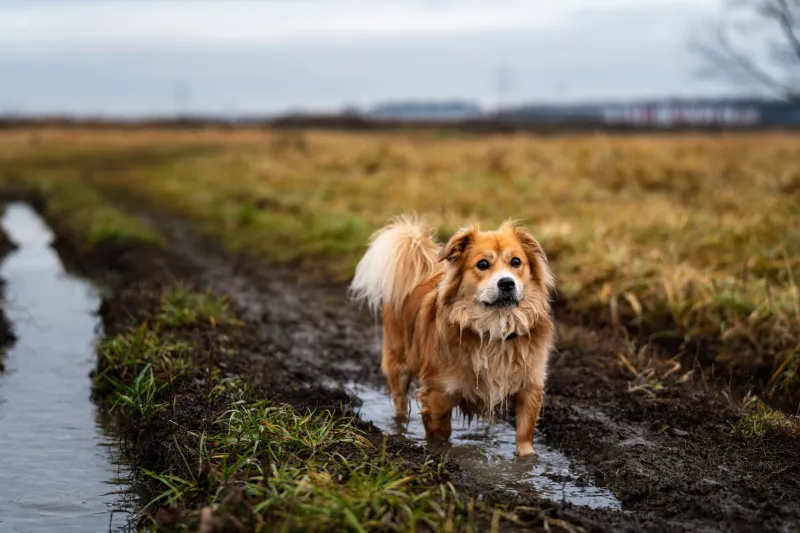
There is a moment, roughly two hundred yards from the front door, when the dog works out where you are going. The lead tightens. The ears go up. If you have walked this way before, he already knows that the last stretch involves a fire, a bowl of water and the possibility of chips. There is no training like repetition.
This is not an article about the restorative powers of country air. It is a practical thing: a handful of routes around Wargrave that are genuinely worth doing with a dog, each of which finishes at the same place. Distances are rough and honest. Mud is guaranteed between November and March.
Why a walk needs a proper full stop
A walk that ends in a car park is a chore with scenery. A walk that ends at a pub is an event. The difference is not really about the pint — though it helps — it is about rhythm. You go out, you get cold, you get slightly lost, and then you sit down somewhere warm while someone else does the work. Dogs understand this better than most humans. Ours start towing towards the gate at the first sight of the church tower.
The other reason is practical. A village pub sits at the middle of a web of footpaths, bridleways and lanes that were never designed for a purpose other than getting from one place to another. Wargrave is unusually well served by this. You can walk for forty minutes or four hours and never once need to plan a car journey in the middle.
The routes
1. The short one (20–25 minutes, flat)
The circuit through the village and back around the churchyard is the one for wet Tuesdays, elderly dogs and anyone who has left the house at four o'clock in December and is already losing the light. It is not a hike. It is a leg-stretch. But it does the job, it stays off the main road, and it gets you back before the kitchen gets busy.
2. The marsh and the riverbank (40–50 minutes, flat, muddy)
Down towards the water and along the bank, then back up through the village. Flat enough for anyone, wet enough that you should have thought harder about your footwear. In summer this is the loveliest half hour in Berkshire; in winter it is a proper boot job. Dogs who like water will get in the water. Towels exist for a reason.
3. Thames Path towards Shiplake (about 2.5 miles one way)
A linear walk rather than a loop, which means either doubling back or arranging a lift. Follow the river, watch out for the anglers — give them room and keep the dog close as you pass — and enjoy the fact that the path is almost impossible to get wrong. Good for a longer Sunday morning when you want to earn your lunch properly.
4. Crazies Hill and back (roughly 3 miles, some lanes)
Out through the village and up towards the woods. Spring brings bluebells; autumn brings the smell of leaf mould and the kind of mud that removes wellies. There are lane sections, so leads on and ears open. Hedgebanks here are worth lingering over if you are the sort of person who notices that kind of thing.
5. Bowsey Hill and the beech hangers (3–4 miles, hilly)
The one that makes you feel you have done something. It climbs. The reward is the view back over the valley and the particular satisfaction of walking into a warm room with cold ears and a clear conscience. Not a route for a flat-faced dog in July, but perfect on a bright, sharp morning in February.
6. The station loop (30 minutes, paved, all-weather)
Out past the station and back through the lanes. Not glamorous, entirely reliable, and useful when the fields are ankle-deep. Also the sensible option if you have arrived by train, which is a quietly good way to plan a pub lunch.
The rules of the room
A pub that welcomes dogs is making a choice, and the arrangement only survives if both sides hold up their end of it.
- Lead on indoors. Always. Even the saintly one. Even for a minute.
- Ask before you settle. Most places will say yes; asking costs nothing and keeps the answer a yes.
- Bring the towel. Not the pub's job. Yours.
- Keep the dog out of the walkway. Staff carrying plates do not need an obstacle course.
- Water first. Ask at the bar and it arrives. Do it before you order your own drink — you will feel better about the whole enterprise.
- Choose your timing. A busy Sunday lunchtime is not the moment to test how your dog feels about a room full of strangers and a roast.
What survives a wagging tail
Order things that can be eaten one-handed, at an angle, while holding a lead under one foot.
Chips are the obvious answer and the correct one — hot, salty, and structurally sound. A bowl of them between two people is the entire deal. The fish finger sandwich does the job if you are hungrier than you thought. A sausage roll or a scotch egg at the bar covers the walk-in-and-out scenario. Pies are excellent and slightly ambitious; you will manage.
What does not work: anything requiring two hands and a knife, a tower of salad, a bowl of soup balanced on a knee. Be realistic about your circumstances.
The Saturday plan, if you want one
Walk at half ten. Take the longer route so the dog is genuinely tired rather than merely excited. Arrive at half twelve slightly muddier than you intended. Order a drink at the bar, ask for the water bowl, sit near the fire, order chips and something else, and stay for an hour longer than the walk itself. Then walk home the short way.
That is not a complicated afternoon. It does not need to be. It simply needs a footpath, a dog and a door that opens onto a warm room.