Front Row, No Reservation: The Case for the Bar Stool at The Bull
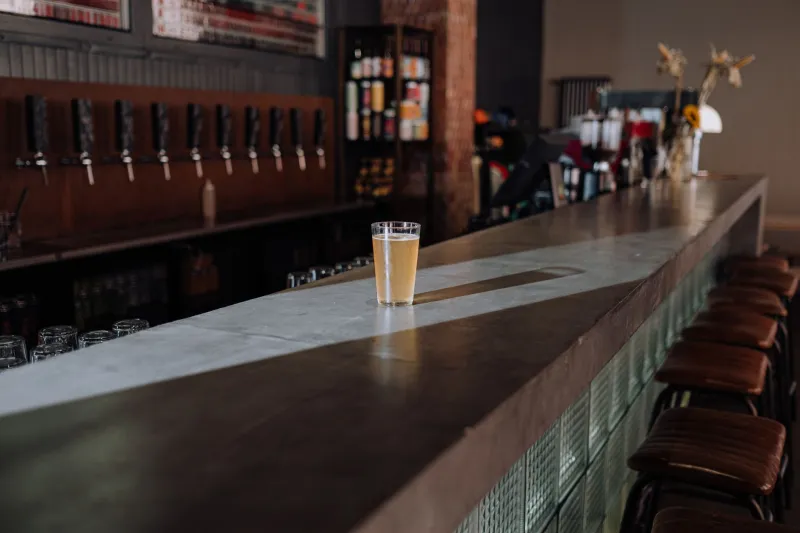
On a wet Tuesday in November, the best table at The Bull is not a table at all. It is a worn leather stool at the bar, third from the corner, with a view of the pumps, the pass and the door. You do not book it. You just sit.
The Seat With No Agenda
Bar stools are the only seats in a pub that come without a plan. A table implies a meal, a timetable, a reason. A stool implies a pint, a pause, maybe a bowl of something. It is the most honest seat in the house because it asks nothing of you. You can stay for ten minutes or two hours. You can eat a full lunch or just a bag of crisps. Nobody minds.
This is the bar stool economy: not money, but permission. Permission to be alone without being lonely, to be early without loitering, to be undecided without holding up a table. In a village pub, that permission is worth more than a window seat.
A Different Pace of Eating
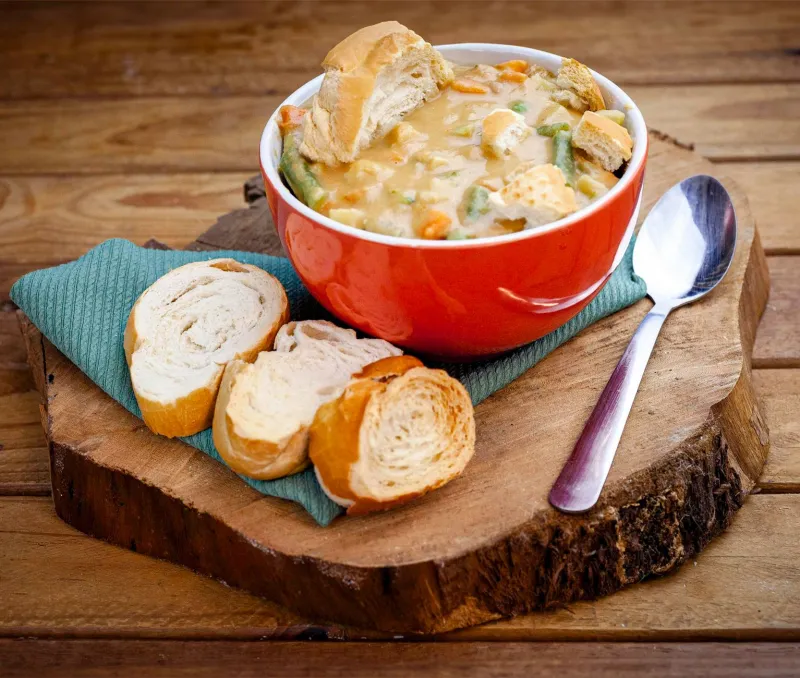
Sitting at the bar changes how a meal unfolds. At a table, the rhythm is set by the menu: starter, main, pudding, coffee. At the bar, it is set by you. You might start with a pint and a bag of scratchings, then decide on the pie. You might order the soup and eat it slowly while reading the paper. You might have two starters and call it lunch, which is one of the great unsung privileges of the stool.
The food is the same. The pace is not. There is something about the height of the stool and the proximity of the bar that makes a plate feel less like an event and more like a pleasure. You eat with your elbows on the wood. You catch the eye of the person next to you. You ask what they are having, and they tell you, and you order it too. That is not a failure of concentration. It is the point.
The Front Row of the Quiet Theatre
A pub bar is a small stage. Behind it: the pumps, the glasswasher, the till, the pass. In front of it: the regulars, the visitors, the dog that has just come in from the river path. Sitting on a stool puts you in the front row of all of it. You see the landlord pull a pint with a proper head. You see the kitchen send out a plate and the server check the ticket. You see the small choreography of a busy Friday night and the slower, kinder pace of a Monday lunch.
You also see the people. Not in a nosy way. In a village pub, the bar is where the news arrives: the road closure, the missing cat, the quiz result, the fact that the river is up again. You do not have to join in. But you can. A stool is an open invitation to a conversation you did not plan to have, and those are often the best ones.
There is also the dog under the stool. Wargrave is a walking village, and the bar is where the muddy boots and wet paws end up. A stool gives you room to tuck a lead under your foot and a bowl of water within reach. Try doing that gracefully at a table for two.
When to Take the Stool (and When Not To)
The bar stool is not for every occasion. It is not for a birthday dinner, a family catch-up with a pram and a high chair, or a quiet word that needs a corner. It is not for a party of six.
But it is for the solo lunch when you want good food without a table for one. It is for the post-walk pint when you are muddy and do not want to commit to a menu. It is for the half-hour before a train, the wait for a friend, the quick bowl of soup on a cold day. It is for the person who wants to eat well and still feel part of the room.
A practical note: choose your stool with care. The corner ones are best for reading. The middle ones are best for talking. The ones nearest the door are best for a quick pint, and the ones nearest the pass are best if you are hungry and impatient. This is not science. It is just experience.
The Economy of It
The bar stool economy is not about spending less, though you can. It is about spending differently. You might spend the same on a pie and a pint at the bar as you would at a table, but you get something extra: the view, the chat, the sense that you are in the pub rather than merely at it.
In a village, that matters. The Bull is not a restaurant with a bar attached, nor a bar with a restaurant bolted on. It is a pub, and the bar is its living room. The stools are the best seats in that room because they are the least formal, the least demanding and the most sociable. They are the seats that say: stay a while, or don't. Either is fine.
So next time you come in, ignore the tables. Walk to the bar. Pull out a stool. Put your pint on the wood. See what happens. The best seat at The Bull has never needed a reservation.