Ten Rounds, Four Pints and One Deeply Unnecessary Argument: Tuesday Quiz Night in Wargrave
Photo: Robin Baker, CC BY-SA 2.0, via Wikimedia Commons
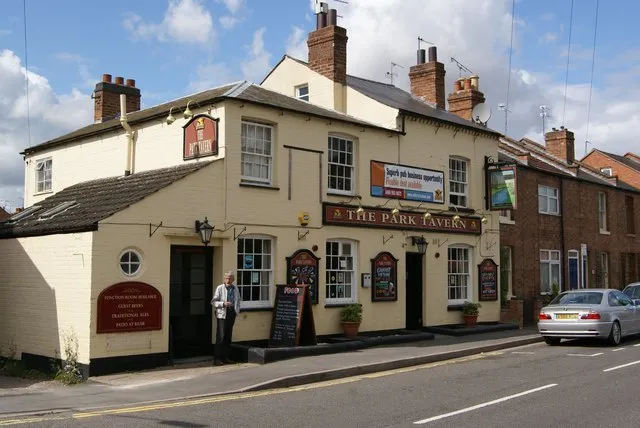
At 7.55 on a Tuesday evening, The Bull looks like a pub that has been quietly ambushed. Every table in the back room has been claimed. There are pens out. Somebody is already disputing the seating arrangement. A man in a fleece is testing a microphone that has, in fairness, never really worked.
By 8pm there won't be a spare chair, and the chance of getting a plate of chips has fallen off a cliff. This has been the pattern for the best part of three decades, and nobody involved shows any sign of wanting it to stop.
How a quiet Tuesday became the best night of the week
Quiz night started in the late 1990s as a bit of winter filler — a way to get a few bodies through the door in the dead weeks between New Year and spring. It worked slightly too well. The format settled, the crowd grew, and what was meant to be a six-week experiment became a permanent fixture of the Wargrave calendar, sitting there every Tuesday regardless of weather, football or elections.
The rules have barely changed. Eight rounds, eight questions each, one picture round, one music round, and a wager round at half time where a confident team can double their score or, more commonly, discover humility. Two pounds a head to enter, maximum six to a team, and the winning pot is paid out in bar credit that tends to be spent, in full, before the night is out.
There's a trophy. It's not impressive. It's not meant to be.
The regulars, and their names
The team names are the real sport. On any given Tuesday you might find Quiztopher Columbus, Norfolk 'n' Chance, Agatha Quiztie, The Ferry Lane Four (occasionally five), and a rotating cast called simply Dave, whose membership changes week to week and whose scores do not improve.
Then there are the archetypes. Every quiz has them. There's the team that argues audibly about the correct answer, gets it wrong, and argues again the following week about the same subject. There's the table of teachers who are unbeatable on literature and inexplicably hopeless on sport. There's the man who knows every chart hit from 1983 to 1991 and nothing else whatsoever. And there's the couple who arrive at ten past eight, order food, and still finish third.
What holds it together is the quizmaster — a role that requires the patience of a saint, the memory of a far better brain, and a willingness to accept blame for every disputed answer since records began. "I've been told I'm wrong about the periodic table by a man who then asked me what a periodic table was," he says, with the weariness of someone who has made peace with it.
House rules (such as they are)
Phones face down, and if you're caught looking something up you lose the round and, more painfully, the goodwill of the room. Shouting out an answer before the question has finished is technically permitted but will be punished socially. Spelling doesn't count against you unless the quizmaster is in a mood. Arguing with the quizmaster is a fundamental part of the experience and has never once changed a result.
Order your food before eight. This is not a rule, it's survival advice.
Tips for first-timers
Come as a team of three or four rather than six. You'll get more of a say and you'll still be competitive.
Sit near the fire, but not nearest — that seat is spoken for and has been since roughly 2004.
Bring a pen each. The pub has some, but they're the sort of pens that give up halfway through the picture round.
Don't panic in the music round. Half the room is guessing, and the other half is guessing with more confidence.
Play the wager sensibly. Nobody has ever won the quiz by going all-in on round four, but plenty have lost it that way.
And if you finish last, accept it with good humour. There's a wooden spoon, and it has been held aloft by some of the finest minds in the village.
A taste of what gets asked
Something to cut your teeth on, drawn from the sort of rounds that turn up on a Tuesday:
- Which planet has the shortest day? (Jupiter)
- What's the highest score possible with three darts? (180)
- Which author created Inspector Morse? (Colin Dexter)
- What's the chemical symbol for potassium? (K)
- Which Berkshire town was besieged twice during the Civil War? (Reading)
The correct answer to all of them, according to at least one table, is: "well, it depends."
Why it still works
Most pubs have a quiet night. Tuesday is traditionally the quietest of the lot, sandwiched between the optimism of Monday and the anticipation of Thursday. Quiz night turns that dead spot into the most reliably full evening of the week, and does something a bit more useful than selling beer: it puts the same forty or fifty people in a room together, every week, on purpose.
Newcomers are absorbed within a fortnight. People who moved to the village knowing nobody have made their first friends here over a picture round. The teams that bicker have been bickering for years and would be lost without it.
So if you've never been, come along on a Tuesday. Turn up at half seven, ask for a table, put two pounds in the pot, and let the room do the rest. You'll be terrible the first time. You'll be back the second.